
Supernatural Psychological Horror
The Listener
Stay on the supernatural side of the shelf with another story where place, memory, and old evidence refuse to stay buried.
See why it fits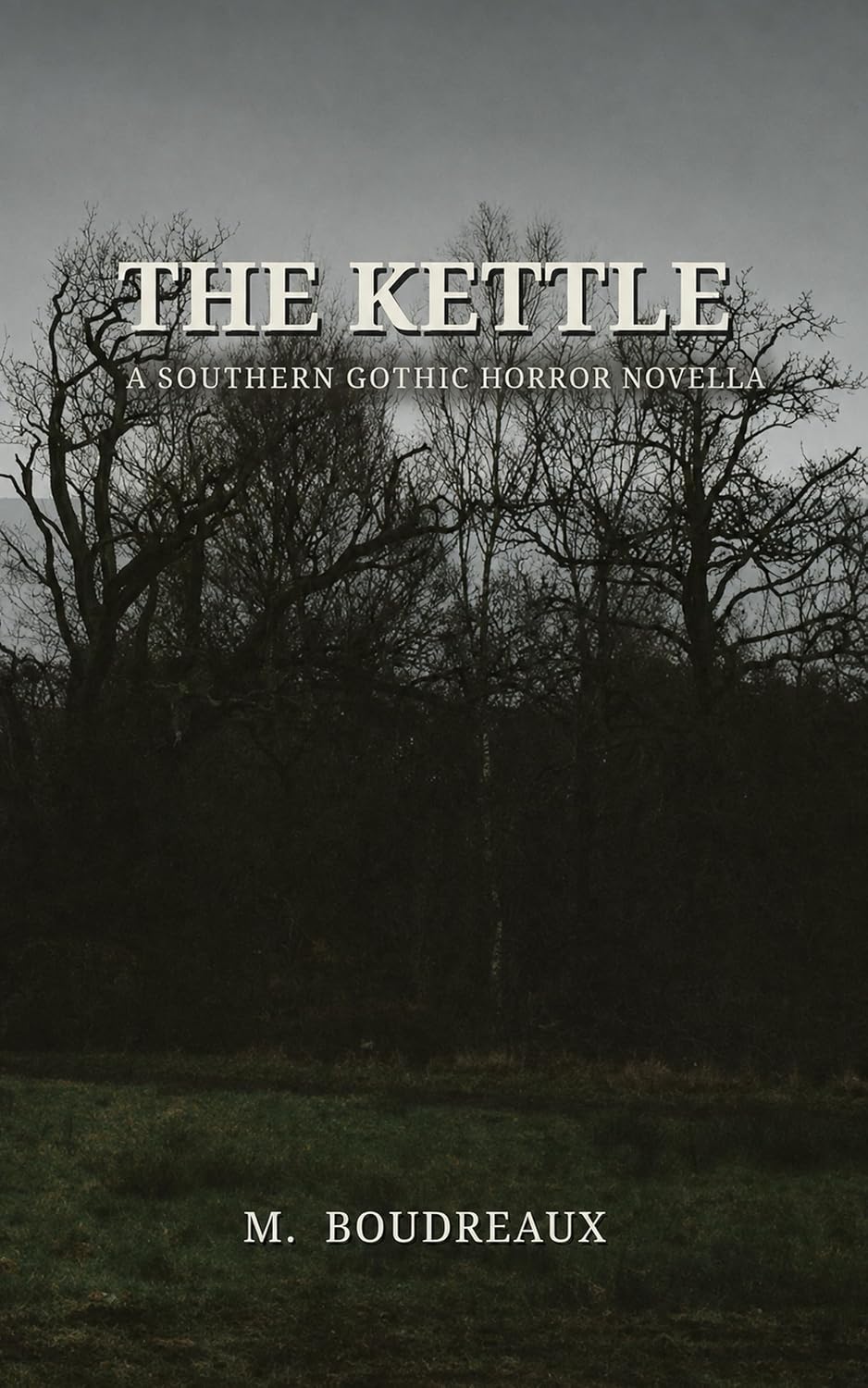
Southern Gothic / Folk Horror
The deed says the land belongs to them. The land disagrees.
Synopsis
The Wexlers take possession of rural Mississippi land believing the paperwork settles the question of ownership. The low ground behind the house has other ideas.
As the property begins changing the family in small, intimate ways, Dana is forced to confront the gap between legally owning a place and being accepted by it. The deeper the family looks into what happened there before them, the clearer it becomes that inheritance can carry more than land, and some places have no intention of letting their history stay buried.
Family conflict · Child endangerment · Death · Buried remains · Supernatural influence
Before you ask
Southern Gothic / Folk Horror
The button on this page goes straight to Amazon. No scavenger hunt required. Buy on Amazon →
Not right now. I am making you wait like a civilized person.
When Dana and Marcus Wexler buy a white farmhouse surrounded by old timber in rural Mississippi, the property feels like a chance to begin again. There is space for their daughter Ruby, privacy for the family, and enough land to make the purchase feel almost too good to be true.
Then ordinary things begin behaving strangely.
Their dog refuses to cross the tree line. Dirt appears where it should not be. Ruby begins having conversations with people no one else can see, and pieces of the property’s history start surfacing in ways that are much harder to dismiss than a nervous animal or a child’s imagination.
Eventually, the family discovers that the land has been keeping evidence.
Human remains buried there come from different generations, which means whatever happened on the property cannot be explained by a single crime or tragedy. Records point toward a fire in 1979 that should have scarred the timber, yet the woods carry no evidence that the flames ever moved through them.
At the center of the property is a low stretch of ground locals call the Kettle.
The name has been there longer than the Wexlers.
The rural Mississippi setting shapes everything in The Kettle. The woods, property boundaries, neighbors, old records, buried remains, and local knowledge all become part of the story because understanding what is happening requires understanding where the family has chosen to live.
Dana and Marcus legally own the property. Their names can sit on the deed, tax documents, and every piece of paperwork that says the land belongs to them.
The deeper Dana investigates its history, the less important those documents begin to feel.
That tension between legal ownership and something older becomes one of the central sources of horror.
The Wexlers believe they bought land. What they actually inherit is a pattern.
That distinction matters because the history of the property refuses to stay contained in the past. Different generations have left evidence behind, and the Kettle appears to have survived every attempt to explain, alter, abandon, or claim it.
The horror grows from the possibility that people have misunderstood their relationship to the property from the beginning. Buying it does not necessarily create ownership. Leaving it does not necessarily end the relationship.
The land may have rules of its own.
Yes. The Kettle combines Southern Gothic horror, folk horror, supernatural horror, and domestic dread.
Its supernatural elements are tied directly to landscape, local history, buried violence, isolation, family relationships, and the accumulation of events across generations. The story allows physical evidence and supernatural uncertainty to exist together without turning the Kettle into a creature that can be completely explained.
The farmhouse matters, but The Kettle is better described as haunted-land horror.
The disturbing activity is connected to the property and its history rather than being confined to one building. That distinction becomes increasingly important as Dana realizes that leaving a particular room, structure, or section of the land may solve very little.
The Kettle is for readers who love Southern Gothic horror, folk horror, rural isolation, haunted landscapes, old woods, cursed-property stories, family secrets, inherited violence, unsettling children, supernatural ambiguity, and slow-burn horror built through ordinary domestic details.
It is especially suited to readers who like horror where the setting carries memory and history rather than serving as a backdrop.
The Wexlers bought a farmhouse and a piece of Mississippi land. The real question is whether anything they purchased ever considered itself theirs.
If this is your kind of horror...
Supernatural Psychological Horror
Stay on the supernatural side of the shelf with another story where place, memory, and old evidence refuse to stay buried.
See why it fits
Psychological Horror / Thriller
Prefer to trade haunted land for human horror? The Grief Counselor keeps the slow-building dread and turns the danger into a trusted professional.
See why it fits